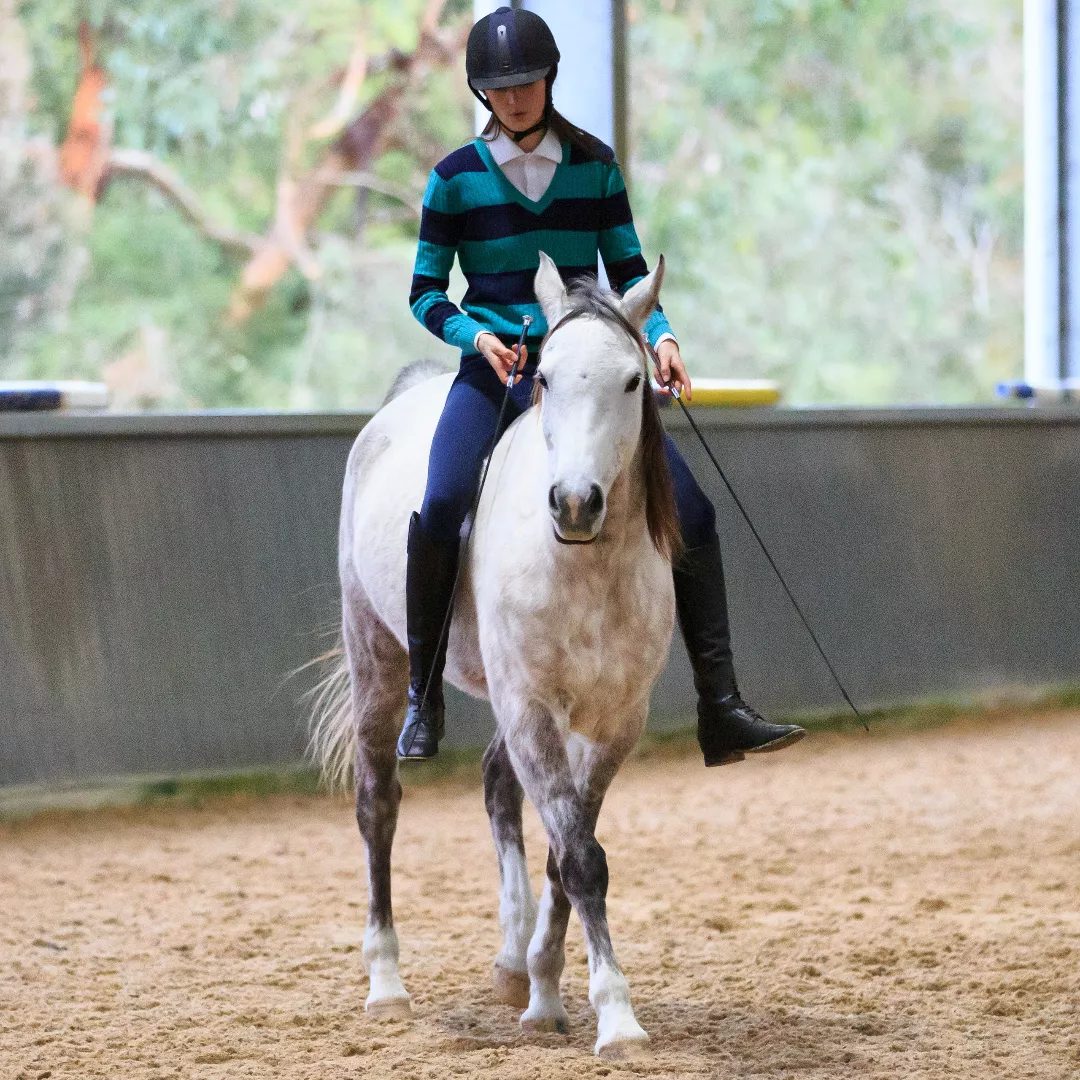
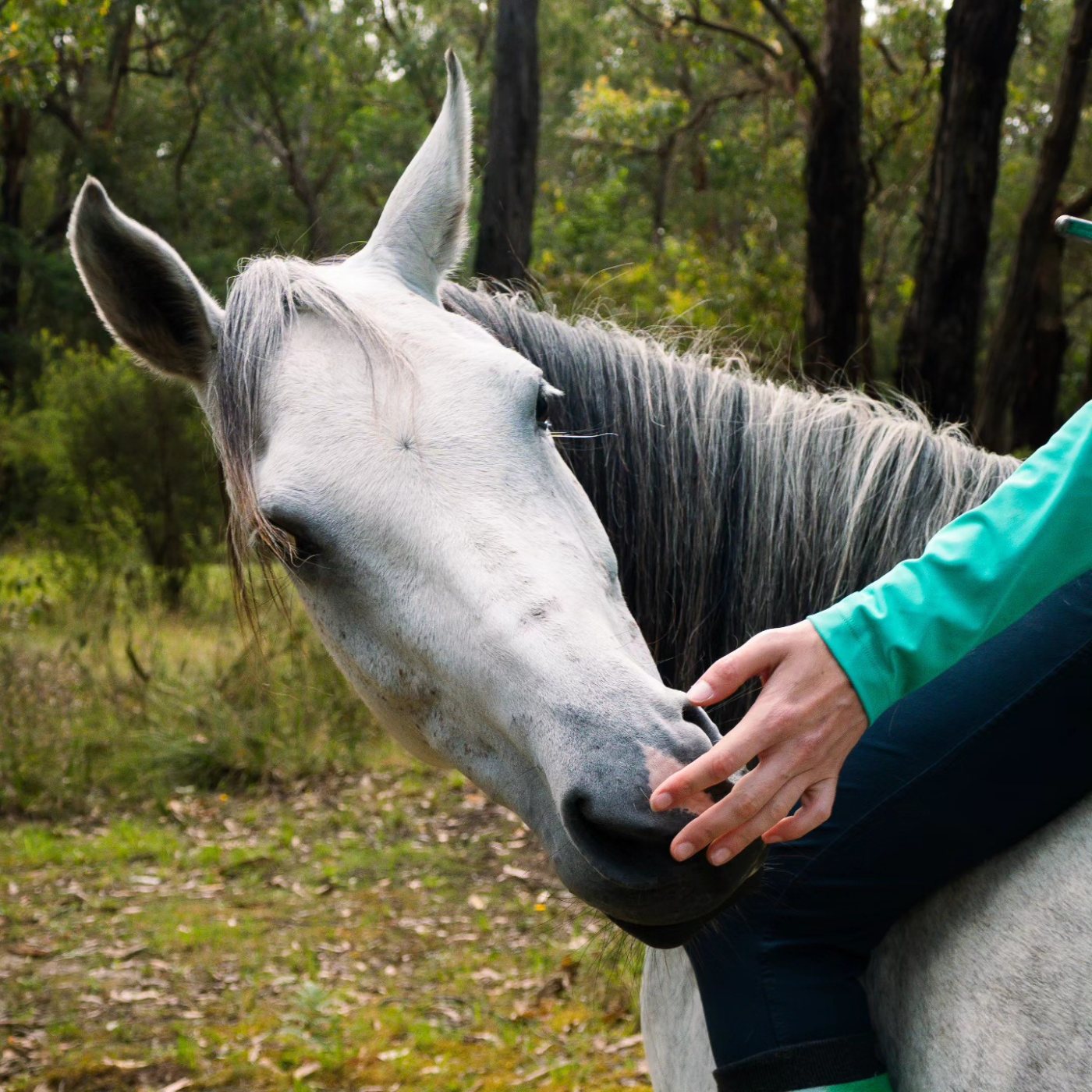
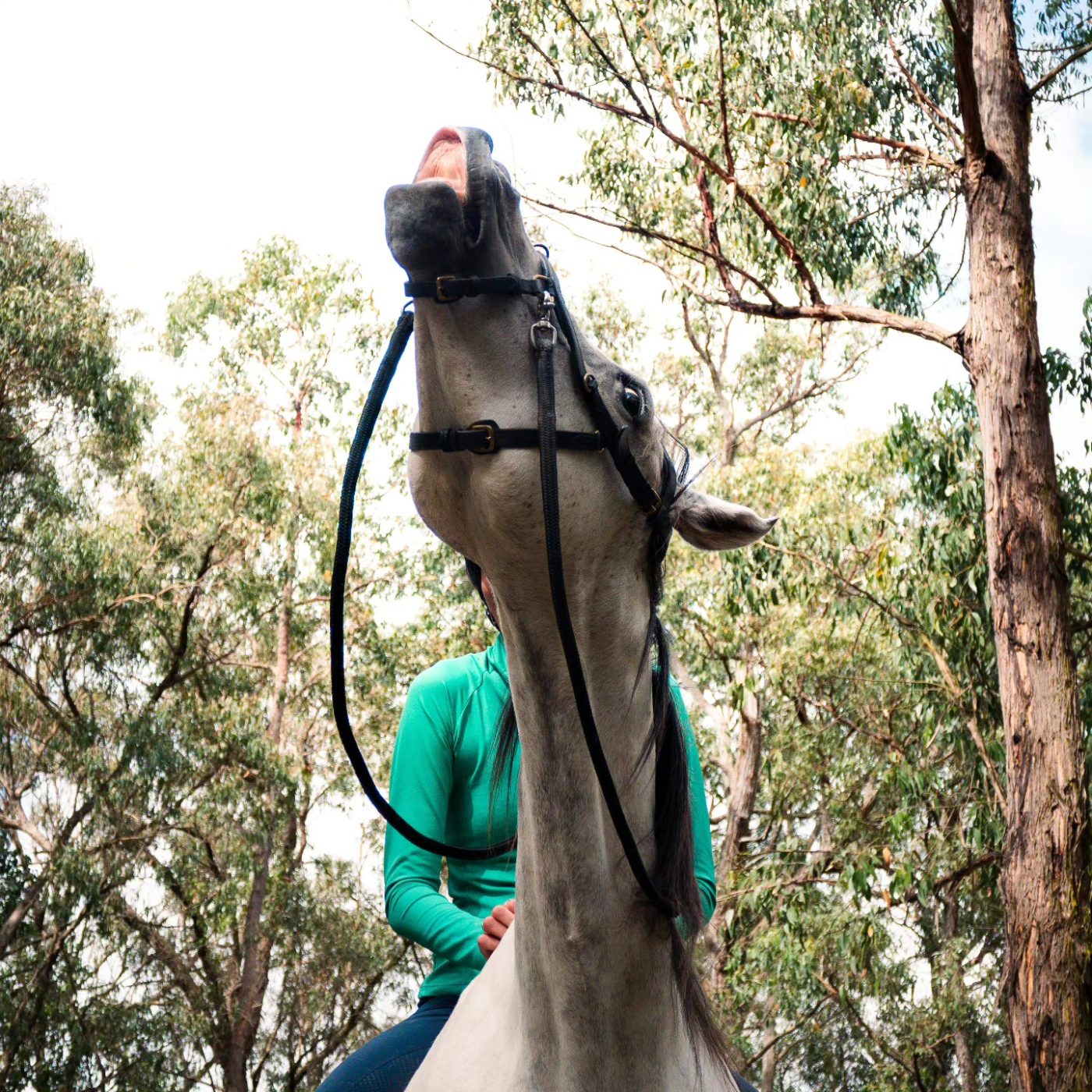
Liberty horse training is the art of working with a horse with no ropes, halters or bridles holding them in place. The horse is free to leave, so everything you build has to be built on trust, clear communication and a horse who genuinely wants to join in.
At Fabled Flow we've spent years training our two Arabian mares, Rahni and Tiamat, at liberty, first in the Victorian bush and now on the NSW South Coast. This guide covers what liberty training is, why it's growing so quickly in Australia, and how you can take your first steps safely at home.
What is liberty horse training?
Liberty training (often called liberty horsemanship) is groundwork where the horse is loose. Instead of using a lead rope to guide the horse, you communicate through body language, position, energy, voice and timing. Ask a horse to walk beside you, stop, back up, circle, or come to you, and when the horse chooses to say yes without any physical tie, you know your communication is real.
The aim isn't tricks. The aim is a relationship where your horse is willing, confident and engaged, and the exercises are simply the conversation you have together.
Why liberty training is growing in Australia
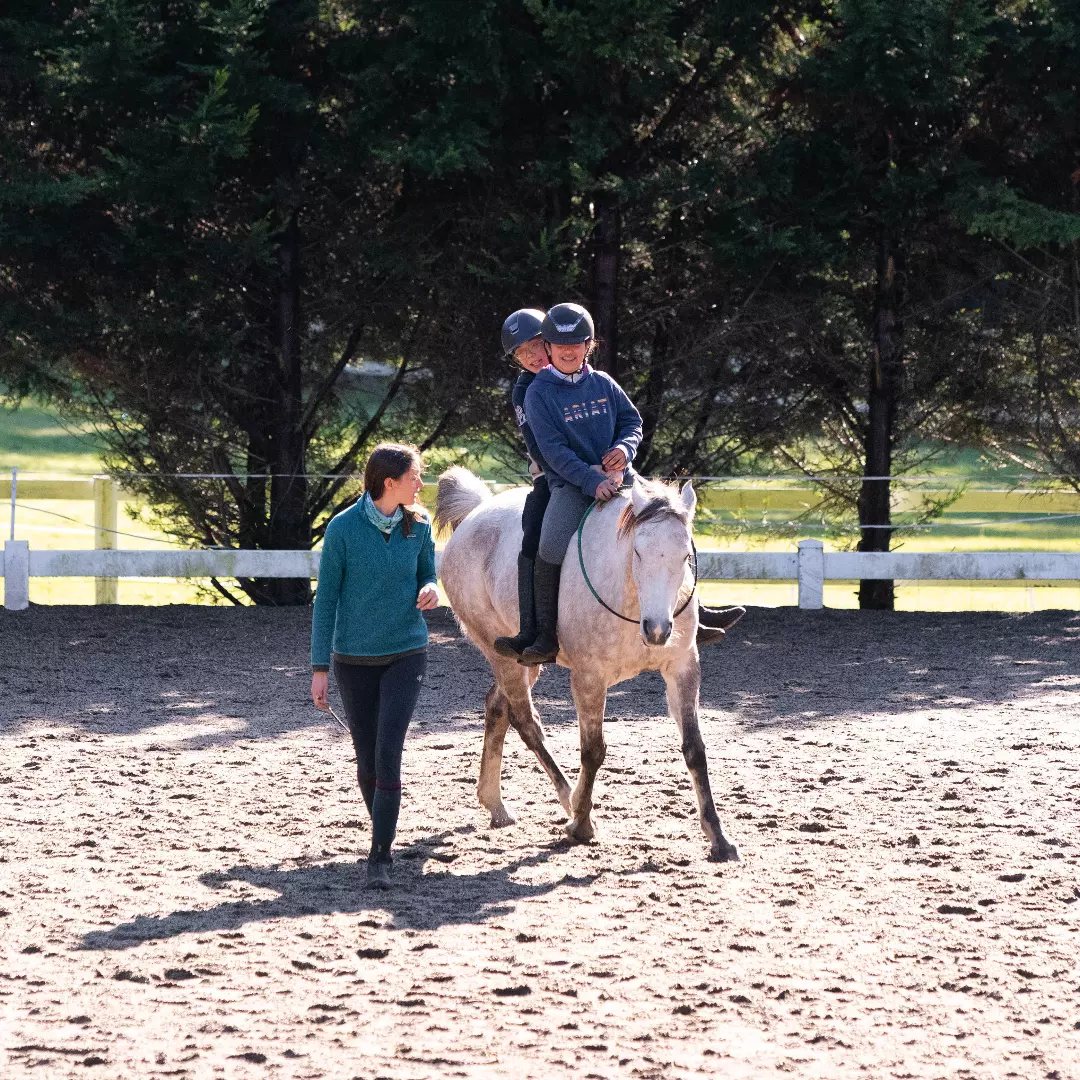
Australian horse people are increasingly drawn to positive, relationship-based horsemanship. Liberty demonstrations at big events like Equitana have introduced thousands of riders to what's possible when a horse works with you by choice. And the benefits carry over into everyday life with horses:
- Better communication: you learn to notice the tiny signals your horse gives, like an ear, a breath, a shift of weight.
- A calmer, braver horse: confidence grows when a horse is allowed to investigate scary things at their own pace.
- Safer ridden work: a horse who listens to your body on the ground is far easier to communicate with in the saddle.
- More fun: for both of you. Play is a huge part of how horses learn.
Before you start: set up for success
Liberty is about freedom, but freedom needs safe boundaries:
- Choose a safe, enclosed space. A small round yard or arena is ideal. Avoid open paddocks until your connection is strong.
- Start on a line. Most liberty skills are first taught on a halter and lead or a neck rope, then the line is quietly removed once the horse understands.
- Keep sessions short. Five to fifteen focused, positive minutes beats an hour of drilling.
- Read your horse. Soft eyes, a lowered head, licking and chewing and an ear on you are good signs. Tension, pinned ears or leaving the conversation tell you to slow down.
- Get help if you need it. If your horse is pushy, fearful or you're unsure, a qualified coach can help you build safe foundations.
Five beginner liberty exercises
1. Join-up and "hanging out"
Simply spend time in the yard with your horse with no agenda. Let them come to you. This is the foundation of a horse who chooses your company.
2. Walking together (shoulder to shoulder)
Walk with your horse at your shoulder, matching your pace. Stop, start, and change direction with your body. When your horse mirrors you without a rope, you've found your flow.
3. The halt and back-up
Teach a clear stop from your body: breathe out, stop your feet. Then a gentle back-up. These two skills are your brakes, and essential before anything faster.
4. Sending and recalling
Ask your horse out onto a small circle, then invite them back in to you. A happy recall is one of the most beautiful liberty moments, and one of the best tests of your connection.
5. Confidence games
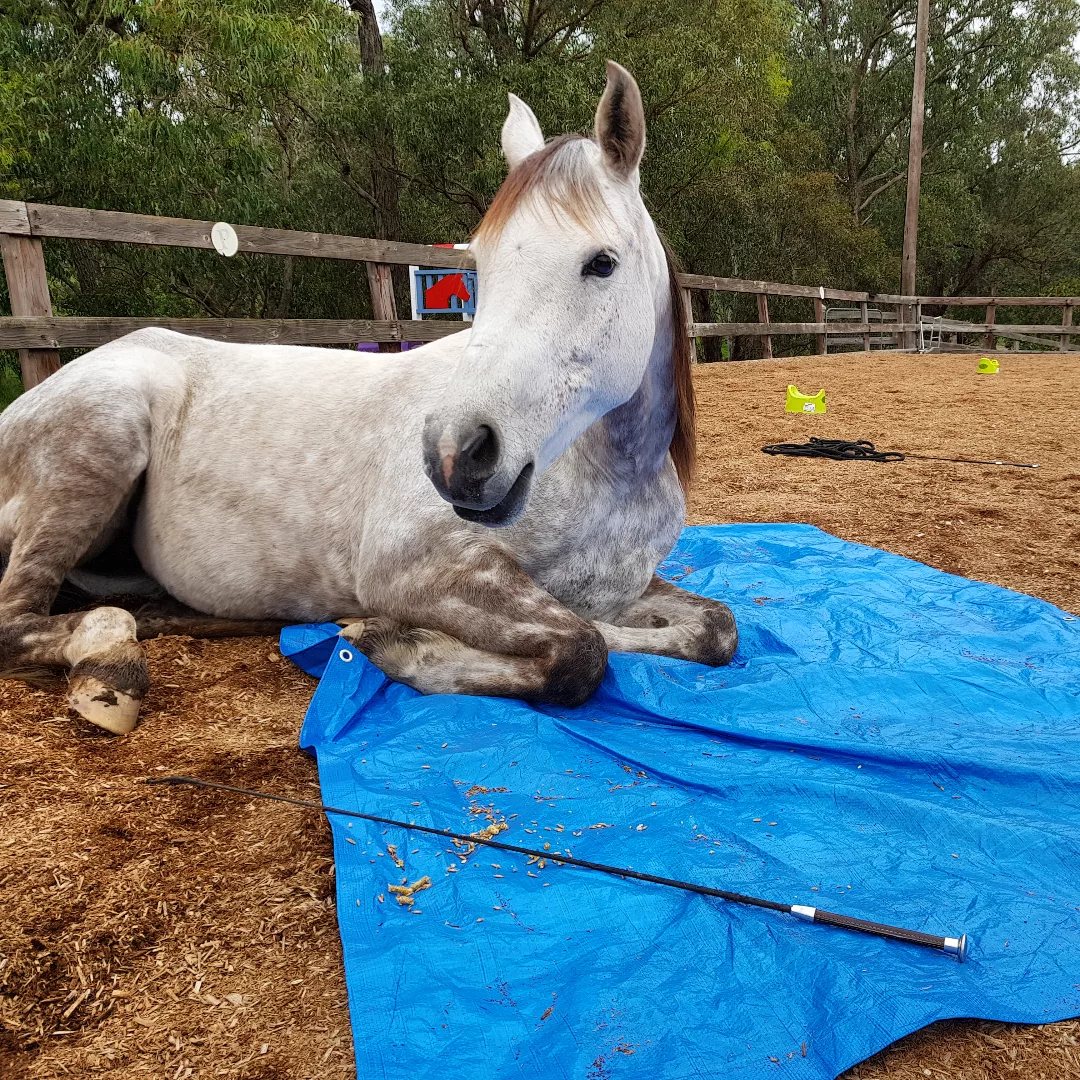
Introduce new objects like poles, pool noodles or a tarp, and let curiosity lead. Rahni learned to lie down on a bright blue tarp this way, one tiny step at a time.
Common mistakes to avoid
- Removing the line too early. If it doesn't work on a line, it won't work at liberty.
- Chasing the horse. Liberty is about invitation, not pressure that sends a horse away in a panic.
- Drilling. Repeat a success two or three times, then reward and move on.
- Ignoring personality. Rahni is a perfectionist; Tiamat is a show-off. Each needs a different approach, and so will your horse.
The more your vocabulary grows, the greater your shared understanding is, and the closer your connection becomes.
From liberty groundwork to liberty riding
Once your horse is confident and responsive at liberty on the ground, many riders take the next step: riding with a neck rope, bitless, or completely bridleless. We cover how we made that transition in our guide to liberty and bridleless riding in Australia.
Frequently asked questions
What is liberty horse training?
Liberty horse training is groundwork done with the horse loose, with no lead rope, halter or bridle. You communicate through body language, position, voice and timing, so the horse is choosing to work with you.
Is liberty training safe for beginners?
It can be, if you start in a small enclosed area, teach each skill on a line first, keep sessions short and seek help from a qualified coach if your horse is pushy or fearful.
How long does it take to train a horse at liberty?
It varies with every horse and handler. Simple skills like walking together and stopping can appear within a few sessions, while a confident, reliable liberty partnership is built over months and years.
Where can I see liberty horses in Australia?
Large horse events such as Equitana often feature liberty demonstrations, and many liberty horse people, including us, share their training on Facebook and Instagram.